A Professional Review of the I Love Santa Design for Embroidery
When you’re evaluating a digital design for real embroidery work, it’s not just about the cute graphic. It’s about how it will translate to stitches, what mood it will create on a finished product, and whether it’s a practical choice for your business or project. Let’s walk through the I Love Santa Svg Designs from that practical, stitch-by-stitch perspective.
First Impressions: Warm, Playful, and Ready for Hoops
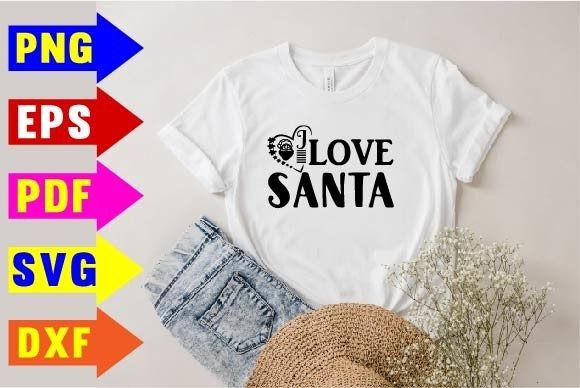
The moment I opened the files, the mood was clear: classic, playful holiday cheer. This isn’t an overly complex or hyper-modern Santa; it’s a friendly, recognizable character paired with a straightforward sentiment. The layout feels balanced, with the "I Love Santa" text integrated in a way that doesn’t fight the illustration. For an embroidery designer, this suggests a design that won’t require excessive reworking. The detail level looks manageable—the Santa has defined areas like his hat, beard, and sack, which are perfect for distinct satin stitch or fill stitch sections. This visual personality screams holiday gifts, family-focused items, and cozy, handmade presentations.
The Perfect Project Match: Where This Design Belongs
In my mind, I immediately pictured it on a soft, cotton-blend sweatshirt or a canvas tote bag. These are the natural homes for this design. The scale and feel would work beautifully for personalized gifts—think a grandchild’s name added underneath on a baby blanket or a pillow cover for a holiday-themed nursery. As an Etsy seller or small shop owner, this is a solid choice for seasonal merchandise like embroidered aprons, tea towels, or even as a standalone embroidered patch. It has that universal, warm appeal that customers look for in holiday embroidery.
A Real-Life Scenario: Preparing a Custom Holiday Tote
Imagine you’ve got a client order for a set of custom holiday tote bags. You load the I Love Santa embroidery file, thinking about fabric texture. On a medium-weight canvas, this design will pop. The key areas like Santa’s red suit will be vibrant, and the text will remain legible. You consider thread colors: a bright red, a snowy white for the beard and trim, and a rich black for the boots. The design’s clear separation of elements makes color planning straightforward, which is a huge plus when you’re managing multiple commercial embroidery projects in a busy season.
Performance in Actual Embroidery Situations
Now, let’s get practical. How does this design hold up when the needle starts moving?
For custom apparel like t-shirts and sweatshirts, the design’s size and detail level are promising. However, on stretchy fabric, you’d need a good stabilizer to prevent distortion, especially around any potential dense stitch areas in Santa’s figure. On a cap or curved surface, the overall shape looks adaptable, but you’d want to test the orientation to ensure the text doesn’t get lost on the curve.
For smaller items like baby clothes, you might consider scaling it down, but here’s a careful-use note: the tiny lettering of "I Love Santa" could become fuzzy if hooped too small. It’s best suited for a medium hoop size where those lettering details can stay crisp. On dark fabric, the design would need bright, contrasting thread colors to maintain its cheerful impact—that white beard on a black sweatshirt would be stunning.
The design’s simplicity boosts stitching clarity. There aren’t overly intricate corners or microscopic details that could bunch up, which means a cleaner finished product and fewer thread breaks during production. This reliability directly affects customer trust and your own efficiency. When a design stitches out cleanly, it reinforces your professionalism as a maker.
Where to Use With Extra Care
While versatile, there are scenarios where you’d proceed with caution. As mentioned, very small hoop sizes on delicate items like infant socks might compromise the text clarity. On highly textured fabrics like a thick blanket, the fill stitches for Santa’s body might need adjusted density to avoid a lumpy feel. Also, on products destined for frequent washing, like kitchen towels, ensuring robust stitch coverage on the main elements will help the design endure.
The design’s value for craft business items is high, but its visual appeal depends on execution. A crisp, well-threaded version on a tote bag feels premium and giftable; a poorly stabilized version on a thin t-shirt might look puckered. That handmade presentation is everything.
Affecting Buyer Engagement and Brand Consistency
If you run a boutique or creative brand, using a design like this consistently across a holiday line—say, on tote bags, pillow covers, and aprons—creates a cohesive collection. That brand consistency makes your shop look curated. For digital product sellers, using this design in clean printable mockups for your listings shows potential buyers exactly what they can create, boosting engagement. The design’s inherent giftability and instant recognition make it a strong choice for products meant to evoke warm feelings.
Practical Notes From the Embroidery Desk
Before you commit this to a client’s project or your holiday inventory, here’s my standard review process:
- Always test on scrap fabric first. Use the same material you intend for the final product. This reveals everything about stitch density and how the details translate.
- Check thread color contrast. Pull actual thread spools and see them against your fabric. Does that red look vibrant on cream? Does it look deep on navy?
- Review the design in black and white mockups. This helps you see the pure shape and balance, divorced from color, ensuring the layout is strong.
- Compare it on light and dark backgrounds. Some designs only work on one; this one seems flexible, but verify.
- Use proper stabilizer. Never skip this step. It’s the foundation of a professional finish.
- Inspect the small details in the stitched sample. Look at the transitions between Santa’s hat and beard, the clarity of the text curves.
- Confirm the licensing. The product description mentions it’s a digital download. Before selling finished items or using it in commercial embroidery projects, verify the specific license terms included with the files. This is crucial for small business owners and creative entrepreneurs.
- Confirm hoop size compatibility. While the design appears adaptable, the provided files (SVG, PNG, EPS, DXF, PDF) are print-ready graphics. As an embroidery designer, you’ll need to process them into an actual embroidery file format compatible with your machine. During that conversion, you’ll determine the optimal hoop size. Don’t assume; check this during your test.
The I Love Santa Svg Designs package, as a set of graphics, offers a solid starting point. Its strength lies in its emotional appeal and clear, embroiderable structure. For t-shirt designs, apparel decorators, and makers of handmade products, it’s a contender for your holiday lineup. Just remember, the magic in any embroidery project comes from pairing a good design with meticulous, professional execution. That’s what turns a digital file into a cherished, real-world product.